Your Photography Questions Answered – Part Two
Posted in Photography Articles
Text and Images by Andrew Prokos
Over the years I have had many students from around the world write to me and ask me questions about my photography career in particular and the photography industry in general. I had always intended to create a resource on my website for students to refer to, and here it is. In Part One of the article I answered student questions related to creativity and inspiration. I also answered questions which were sent to me about specific fine art series. In this second part of the article I will discuss technical questions that have been sent to me by students, as well as career-related questions. If I have neglected to answer something you might think is important, please feel free to drop me a line and let me know. I may even update this post with the answer.
Below are interviews which I have given over the years which include responses that students may find helpful:
- Digital Photographer – Discuss my long-exposure work and my series Flux
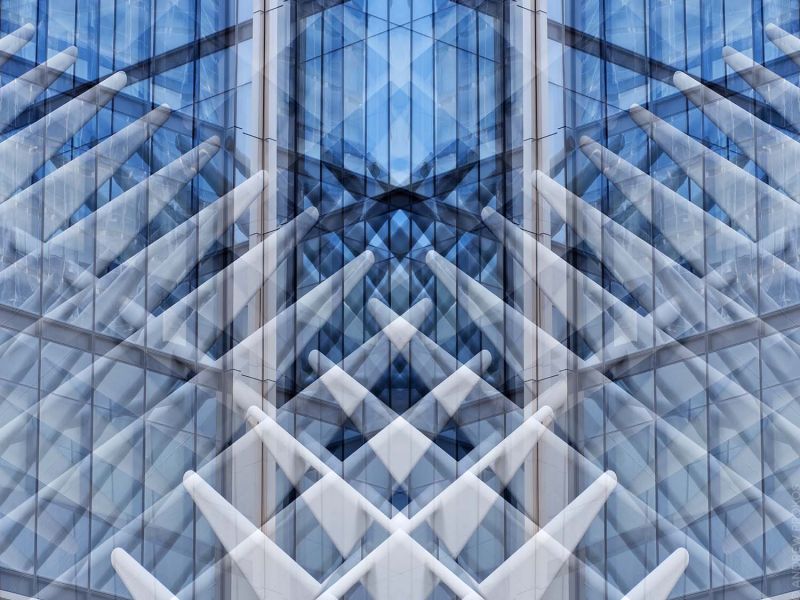
- Xposure Festival Video – A guided tour of my series Inverted and Metropolis Abstracted
- Medium Format Magazine – I discuss the series Metropolis Abstracted and my other work here
- Widewalls Art – I discuss the concepts behind my series Inverted and Metropolis Abstracted
- Archisearch Interview – architectural photography
- Arcspace Interview – architectural photography
Don’t forget to follow me on your favorite social media…I don’t do TikTok and I don’t use Twitter much anymore, but Instagram is here, Threads, Facebook, and YouTube.
Technical Questions – Camera Bodies, Lenses, Exposures, Etc.
I first wanted to say that I really enjoy your work and the way you have been able to capture the images. I am a third year university student and I was wondering if you had any advice on concepts, techniques, approach, production and output that is relevant in this line of photography.
– Crystal from the UK
Hi Crystal, thanks for your question…this question is all-inclusive and deserves an article all of its own. I would point you to my other answers in this article and to the interviews linked above. I will give you a quick response to each item:
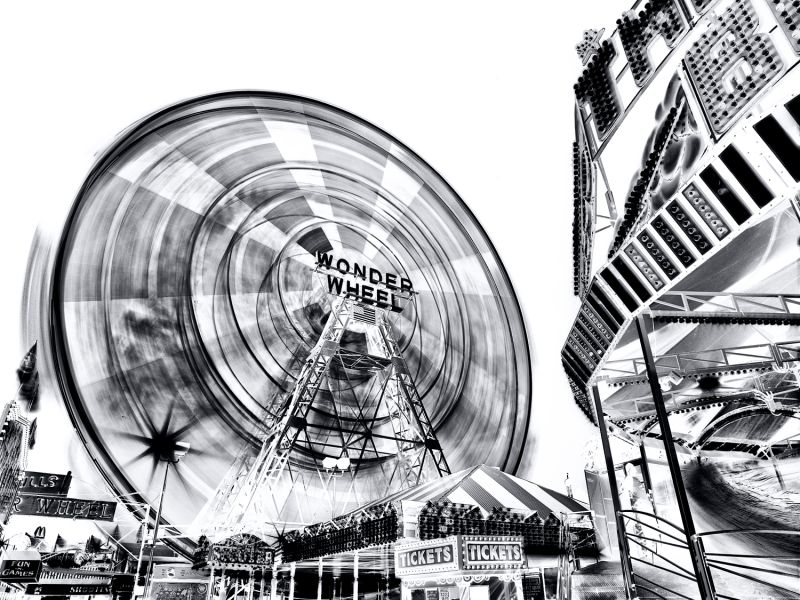
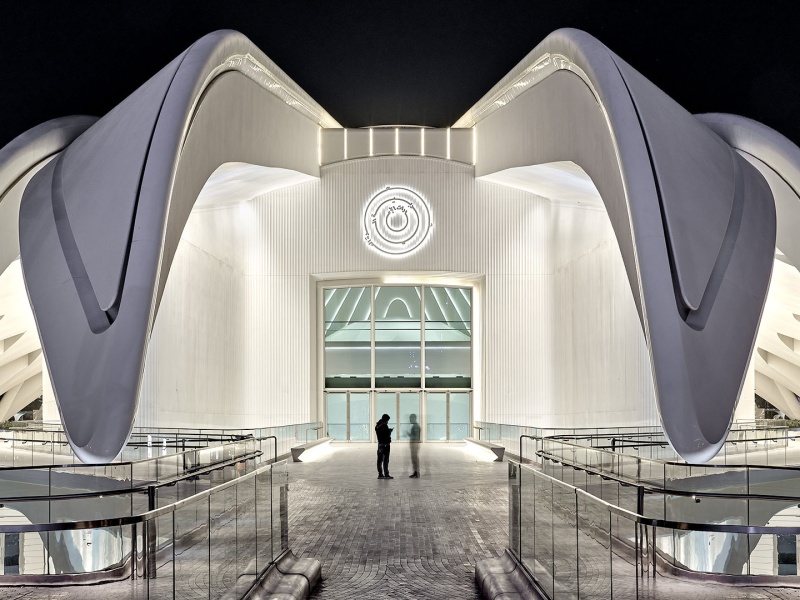
concepts – I find concepts from any number of sources, but in general most of them revolve around the depiction of time, space and perception. I am fascinated with the depiction of time and motion and so these generally creep into my work. When I am capturing flat/static images such as what was captured in the series Inverted UAE, time and motion were not essential to the message, it was more about the shift in perception that occurs when you take away the familiar color space and replace it with its opposite.
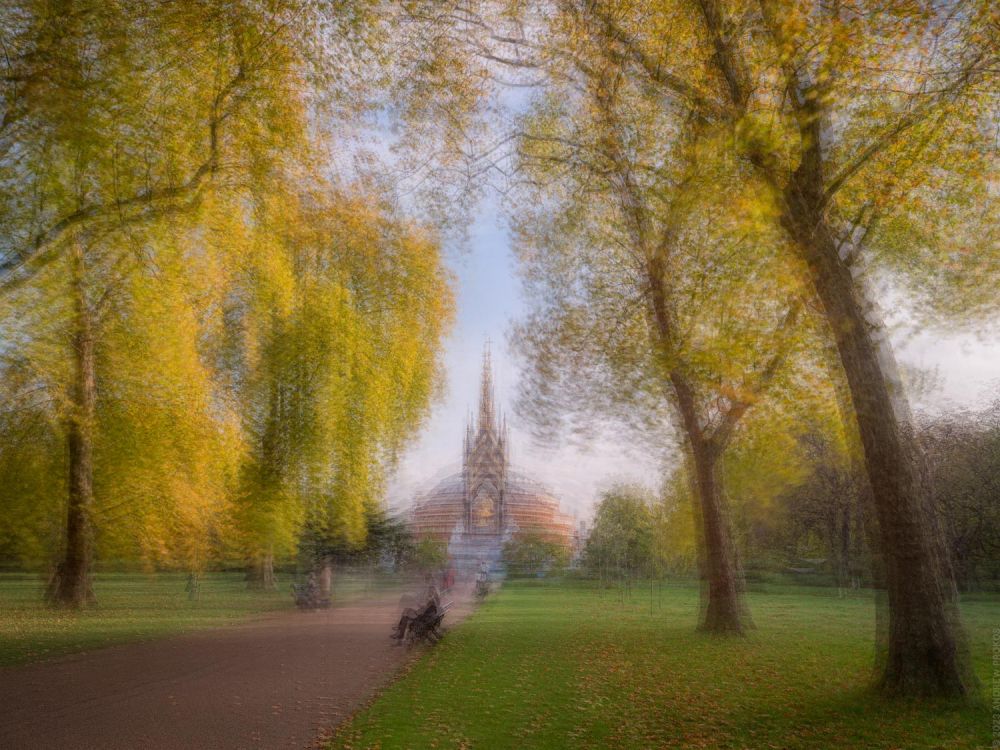
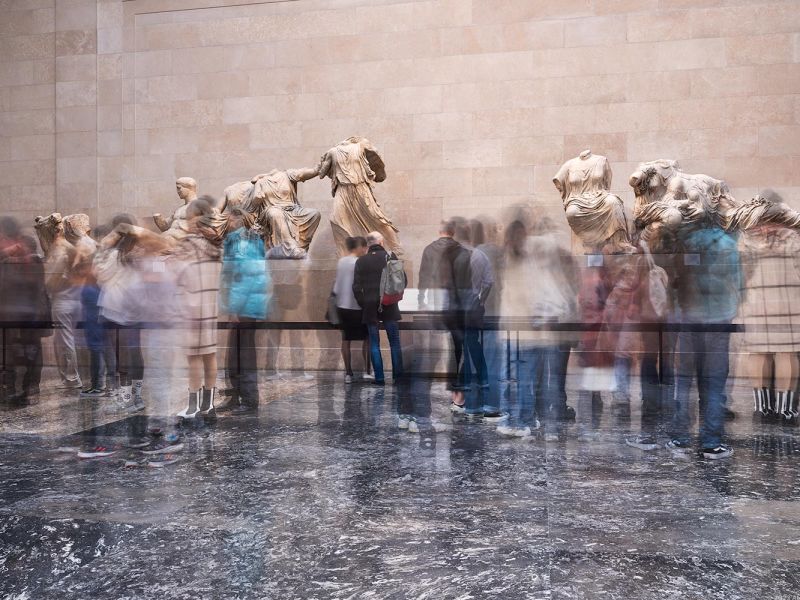
techniques – I have always used long-exposure times since the beginning of my career to capture night scenes. Moving to the use of long-exposure times during the day was a natural progression and I use it to express the temporal element of the scene as well as a sense of dynamism. I address technique more in many of the interviews, and especially the Widewalls Art Magazine interview.
approach – You would probably have to elaborate on this question a bit more…I approach different types of work in different ways. I would say that since I am out on location my shoots are not as controlled or scripted as studio photographers…they are much more fluid and impromptu. I don’t build sets, I don’t hire models, I don’t add people in post, I don’t swap out backgrounds etc. At a certain point that type of photography reaches a level of artificiality that I am not very interested in as an artist. I do, however, plan my shoots. I do research on locations, buildings, and map it out. I schedule shoot locations by time of day as something I want to capture by day, other things I think will work better at dusk or at night.
I would point also you to the following articles:
Abstract Photography as Contemporary Fine Art
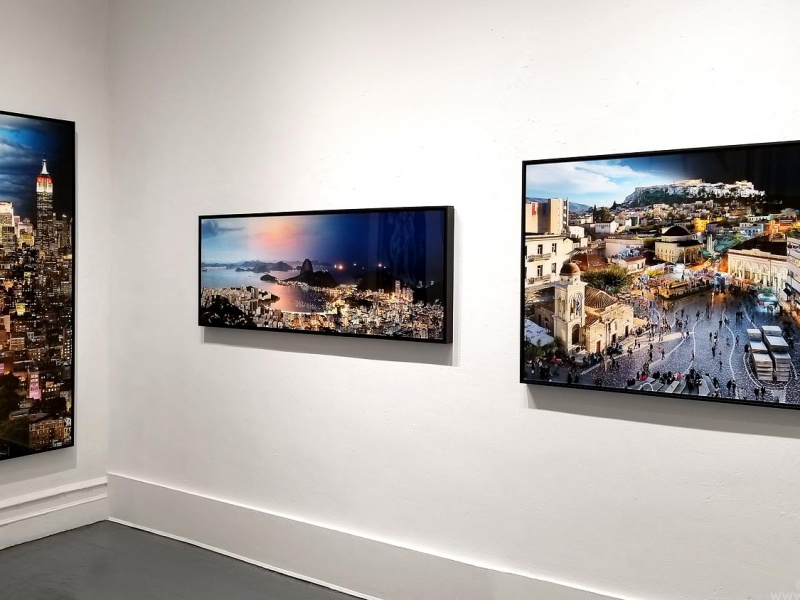
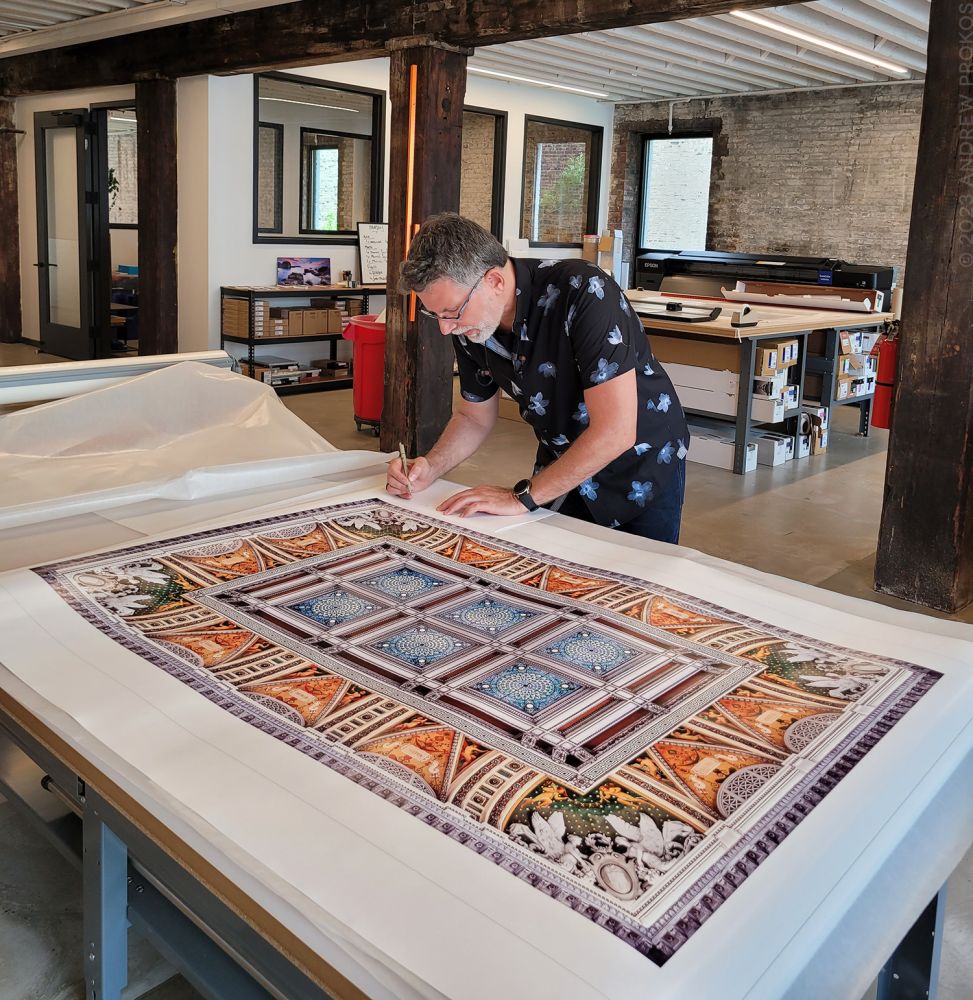
production – I have touched on my production techniques in some of the articles above as well. In general I try to keep post-production to a minimal these days. The main exception is with the series Night & Day, which involves an enormous amount of post as the scenes are stitched together from multiple images, then layered one atop the other.
output – I would point you to the following articles where I touch on this:
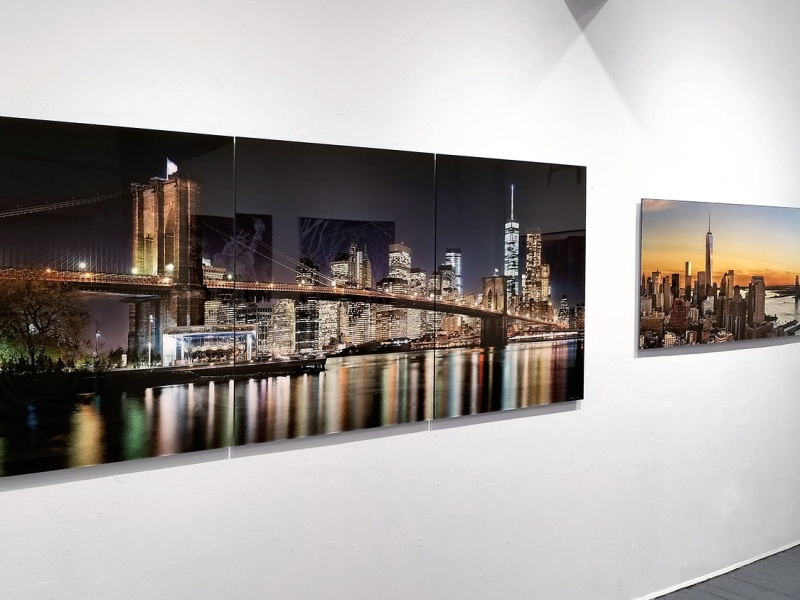
The Essential Elements of Gallery-Quality Fine Art Photography
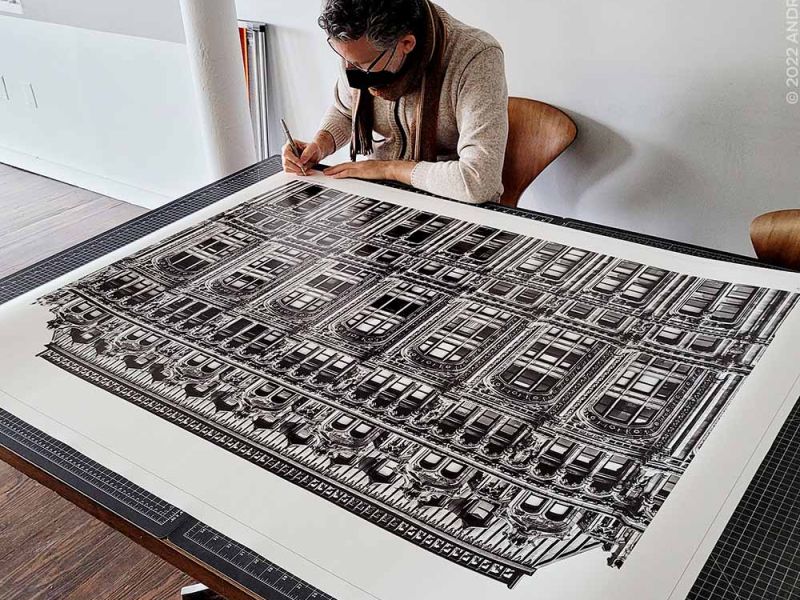
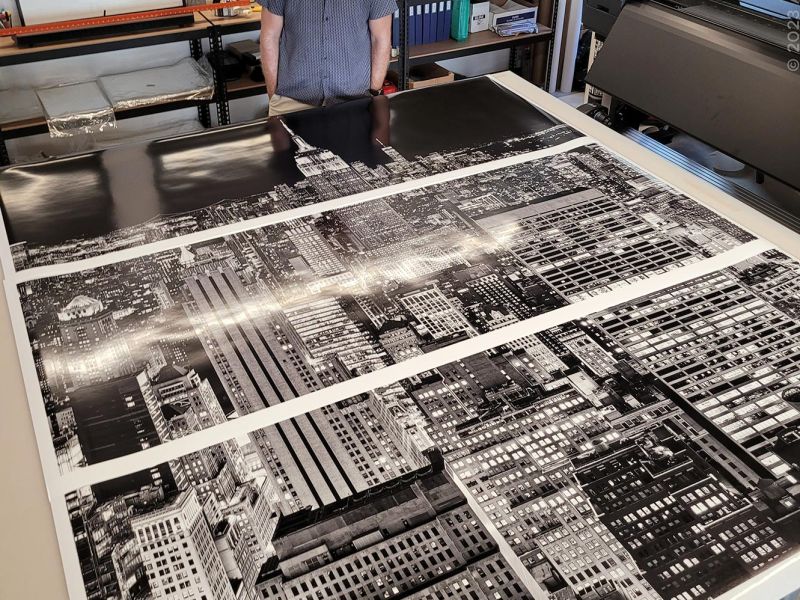
How I Create Large-Format Art Prints for Collectors
Do you shoot both digital and film or both?
– Addison from the USA
When you go out on a photo shoot what kit do you tend to take you?
– Tyler from the UK
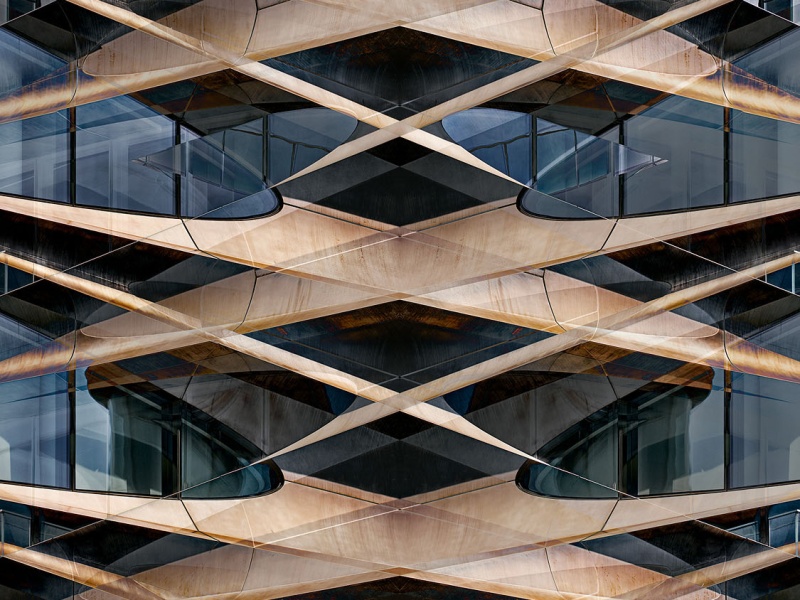
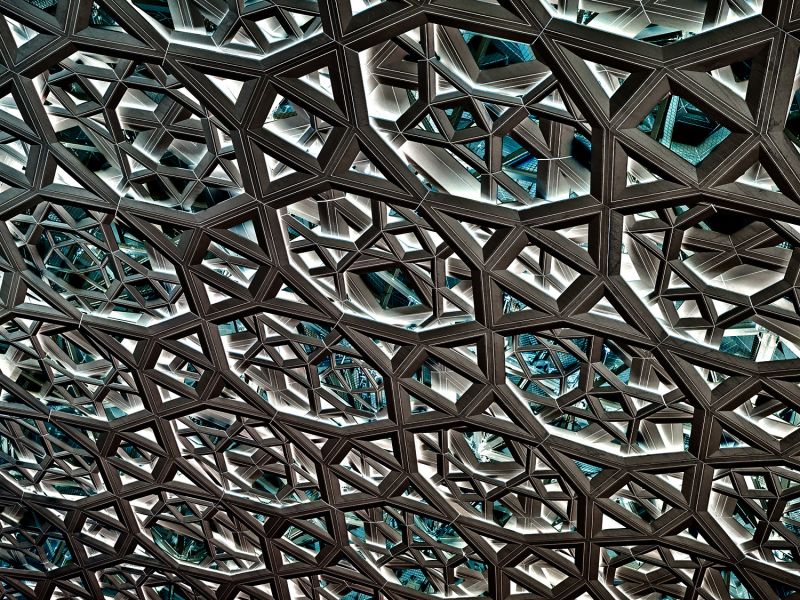
Photography Series
Do you have certain items with you regardless of whether you are doing an indoor or outdoor shoot?
– Tyler from the UK
With the work you produce, which is very interesting, I love how you work with natural lighting throughout your images. Do you only work with natural lighting?
– Jordan from the UK
Do you have a favourite camera/s?
– Tyler from the UK
What is your opinion of digital camera technology compared to using film?
– Tyler from the UK
Do you have a favourite type of shot you like to take?
– Tyler from the UK
Photography Galleries
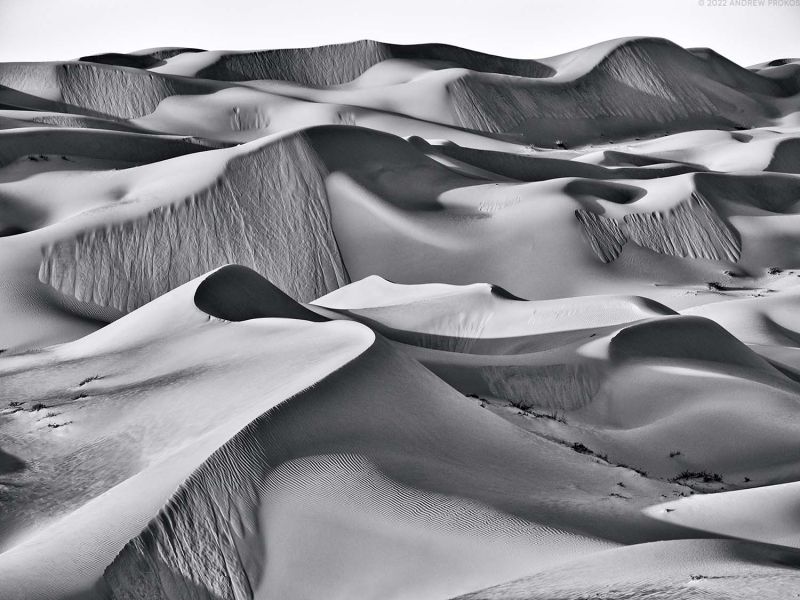
What is the best photograph you have taken and why do you think it is your best? (- would it be possible for you to attach it to your reply)
– Tyler from the UK
How has your photographic style evolved during your career?
– Tyler from the UK
Do you prefer to take the perfect photograph or manipulate a “good” image into a “great” one via the PC?
– Tyler from the UK
What do you find to be the most effective enhancing process ; light box etc?
– Tyler from the UK
I was wondering if you would be willing to share what camera and lenses you use for most of your work.
– Elizabeth from the USA
Hi Elizabeth,
Thanks for your question…I have used a wide range of lenses over the years. Please keep in mind that I started with a 35mm Nikon film camera, then moved to a 6x45cm medium format film camera outfit and lenses, then I added a Fujifilm panoramic film cameras which used Fujifilm large format lenses. After that I transitioned to 35mm digital Nikon bodies, which I still use for most commercial shoots and some fine art work, and a 102 megapixel Fujifilm medium format body for fine art work. This transition spanned 20+ years. So in general I can say that I use the entire range of lenses for my work, from around a 24mm ultra wide to 200-300mm zoom lens when I was using 35mm.
With my current Fujifilm medium format digital system I pared down the number of lenses so that I could travel lighter:
- Fujifilm GF 100-200mm f/5.6 R LM OIS WR Lens
- Fujifilm GF 32-64mm f/4 R LM WR Lens
- Fujifilm GF 1.4X TC WR Teleconverter – this extends my 200mm lens to almost 300mm
I use a Nikon D850 body and these Nikon lenses for commercial projects such as architectural shoots:
- Nikkor 19mm Tilt-Shift
- Nikkor 24mm Tilt-Shift
- AF-S Nikkor 17-35mm
- AF-S Nikkor 24-70mm VR
- AF-S Nikkor 70-200mm VR II
In addition to the camera and lenses there are other important items to consider:
- A range of filters – Polarizing filter, Neutral Density filters in 4,8, and 10 stops, graduated ND filters. I recommend spending on quality filters as the lower-priced filters will add an unpleasant color cast to your images. I use B+W brand filters mostly, and also Hoya Pro line ND filters.
- A Benbo four section carbon fiber tripod that can be extended to shoot fairly tall…taller than my height. It can also be compacted to shoot very low.
- Arca-Swiss D4 geared tripod head – expensive and built like a tank. Probably overkill unless you are doing a lot of commercial work
- Cable release – I learned to use these early on and now use them for every shoot
- Tethering cable + Ipad – If I really need to proof commercial work on the spot I use a 15′ tethering cable connected to an iPad
Hi, I’m a student of architecture and I want to know what are the terms of use for a academic work, if I could download your photos and use it in my work. I would only use the pictures to illustrate, it will not be used in commercial stuff. The size could be the small one, since it will be a digital media.
– Guilherme from Brazil
Hi Guilherme, you can generally use the images from the site for non-commercial / academic use yes. You can use it to illustrate your work without any problem. A photo credit and backlink to the page where you found the image is required for any online use. That way people know where the image is coming from, the original source. Best, Andrew
Related articles
-

Architecture Photography – 100 Remarkable Examples from Around the World
100 remarkable examples of architecture photography from aro...
-

Your Photography Questions Answered – Part One
Photographer Andrew Prokos answers questions about creativit...
-
Stories from My Time in Front of the Lens
Photographer Andrew Prokos reveals his never-told story of w...
Career-Related Questions
How did you find your way into fine art photography? How did you enter the industry?
– Samantha from the UK and Jordan from the UK
I have discussed this in various interviews, and also in this article. I did not follow a traditional path into fine art photography. My degree is in Political Science and I started shooting as an amateur in my early 20’s. I continued as an amateur for a decade until I finally turned pro at the age of 30. In the meantime I worked in various jobs…at a law firm, at the digital ad agency Digitas during the tech boom of the late 90’s, at Young and Rubicam as a broadcast video editor (editing TV commercials for the Spanish language market). During that time I was building my own website and shooting new material to post on the website…keep in mind that social media did not yet exist.
What advice / lessons learned would you give to those working their way into this field?
– Samantha from the UK
I could write a book just on this. Perhaps top of the list is to realize that this is not just a creative passion, but also a business that requires a certain level of planning and handling tedious tasks in order to stay viable. Most of your day won’t be sitting around conceiving new ideas nor even shooting, it will be in paperwork, estimates, cost control, permissions, legal contracts, dealing with your attorneys, etc. It can get the better of you as that is not why we all get into creative fields. I would also say that you will need to expect ups and downs…it’s rarely a straight line upward for anyone. During the good times when a lot of work or sales are coming in you will need to devote yourself to your work entirely, and that often means putting off spending time with friends, family and relationships. It’s not egotistical, it’s necessary. When the slow times come you will have plenty of time on your hands to shoot new work and to catch up on interpersonal relationships. With the arts it is often feast or famine, if you are not prepared to tighten up every few years when the economy slows down dramatically then consider another field that is more stable and in demand.
When did you first show an interest in photography? – was it something you gradually moved into or was there a lightbulb moment when you thought it was something you would like to pursue?
– Samantha from the UK
As I mentioned, I was in my early 20’s when I first picked up a camera. I was working at the Metropolitan Museum of Art as a security guard, which was my first job in NYC while I was still in graduate school at NYU. You can read more about that in the article I linked to above. My interest was not gradual, it was rather all consuming from the time I picked up the camera. What was gradual was the transition from amateur to professional photographer and then to a primarily fine art.
What is the best piece of advice you have been given?
– Tyler from the UK
What advice would you give your younger self as you were starting out?
– Addison from the USA
Do you need an intern?
– Addison from the USA
- Design and implementation of mass email campaigns
- Shooting, editing, and scheduling of product and promo videos for YouTube and social
- Technical and performance analysis and coding of website edits and redesign
- Writing of new editorial pieces for the website
- Social media channel growth and management
- Web traffic analysis, trend analysis, and SEO implementation and updates
Related articles
-
14 Top Photography Galleries in New York City
A comprehensive list of the top fine art photography galleri...
-
12 Top Photography Museums to See in New York City
Fifteen of the top museums in New York City which prominentl...
-
The Beauty of Acrylic-Mounted Gallery Prints
Photographer Andrew Prokos discusses the process behind maki...
-
The Essential Elements of Gallery-Quality Fine Art Photography
Photographer Andrew Prokos discusses the process behind maki...
-
Liwa Desert and the Making of ‘Dunescapes’
Photographer Andrew Prokos discusses the making of his serie...
-
How I Create Large-Format Art Prints for Collectors
Photographer Andrew Prokos discusses the process of creating...