How I Create Large-Format Prints for Collectors
Posted in Photography Articles
Text and Images by Andrew Prokos
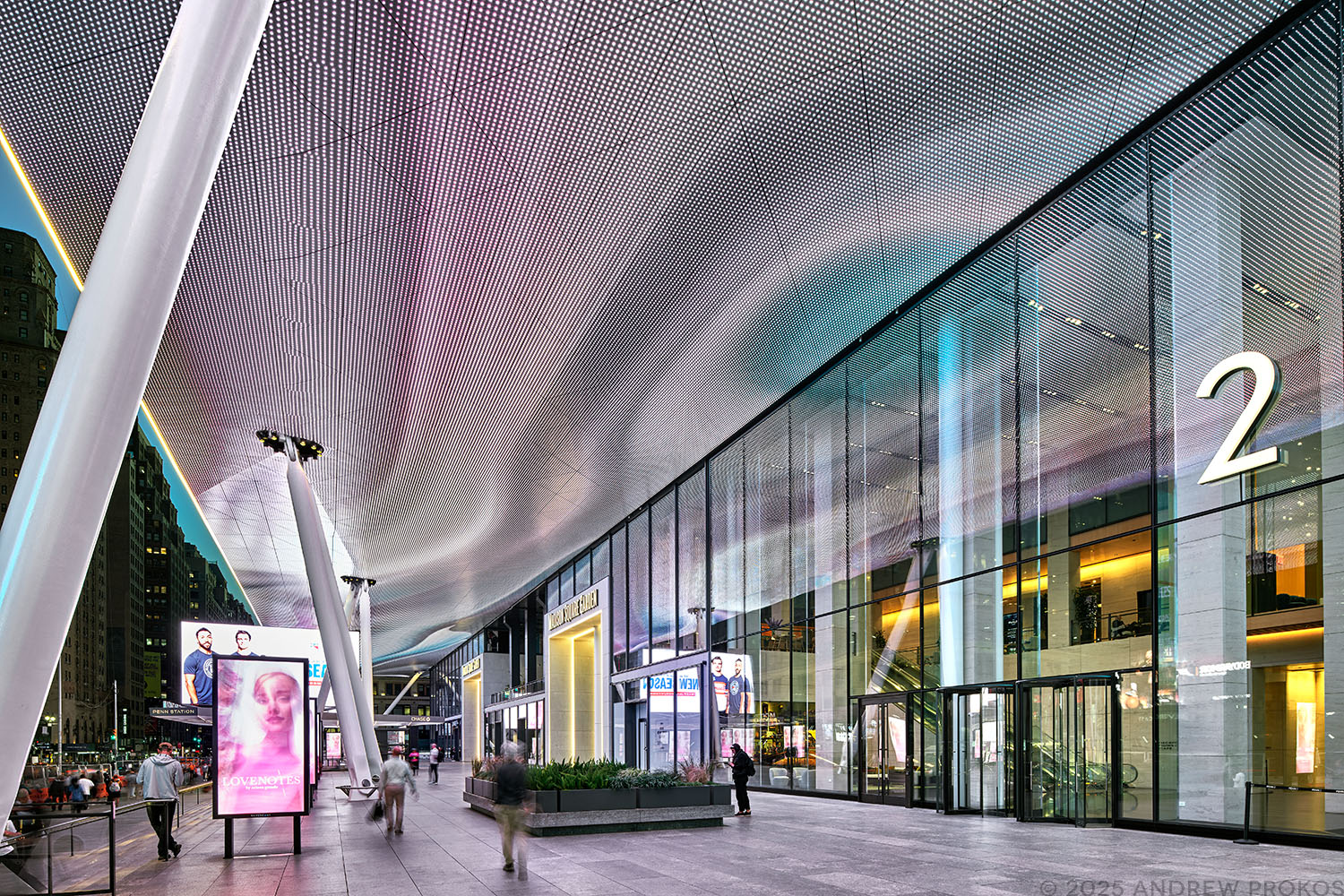
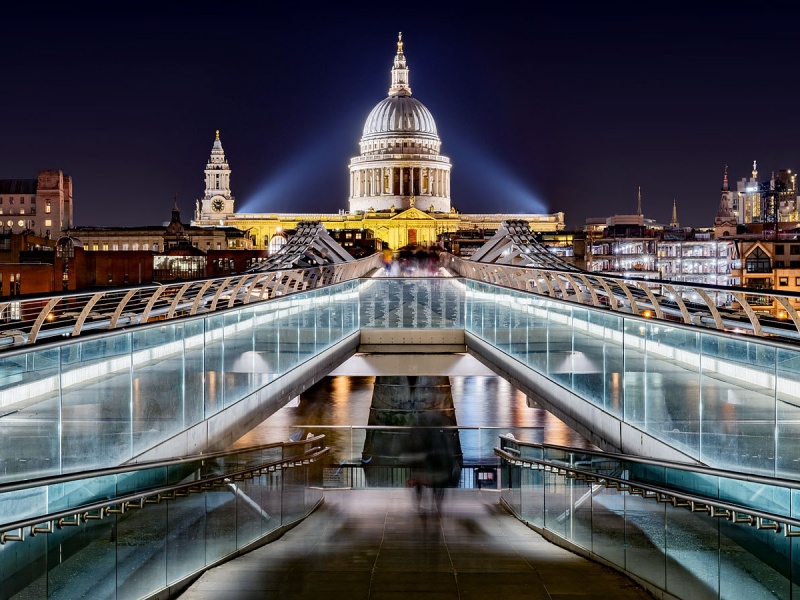
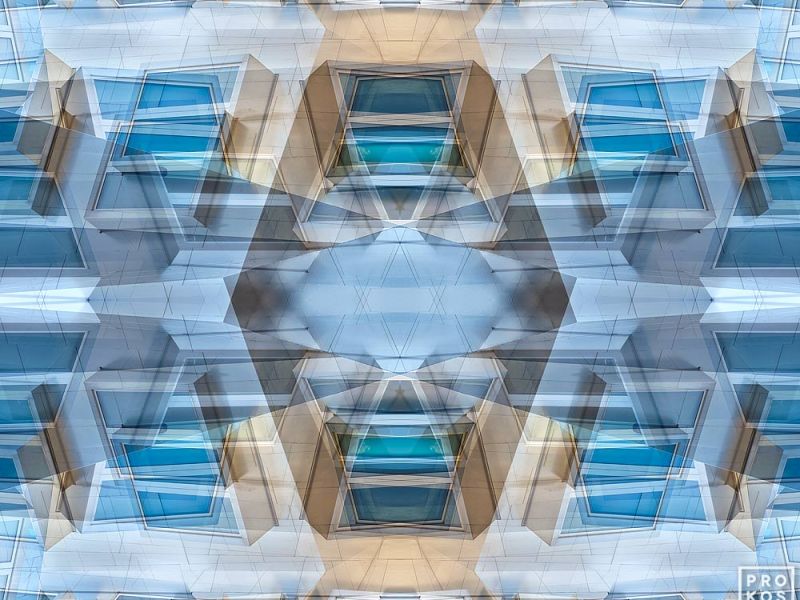
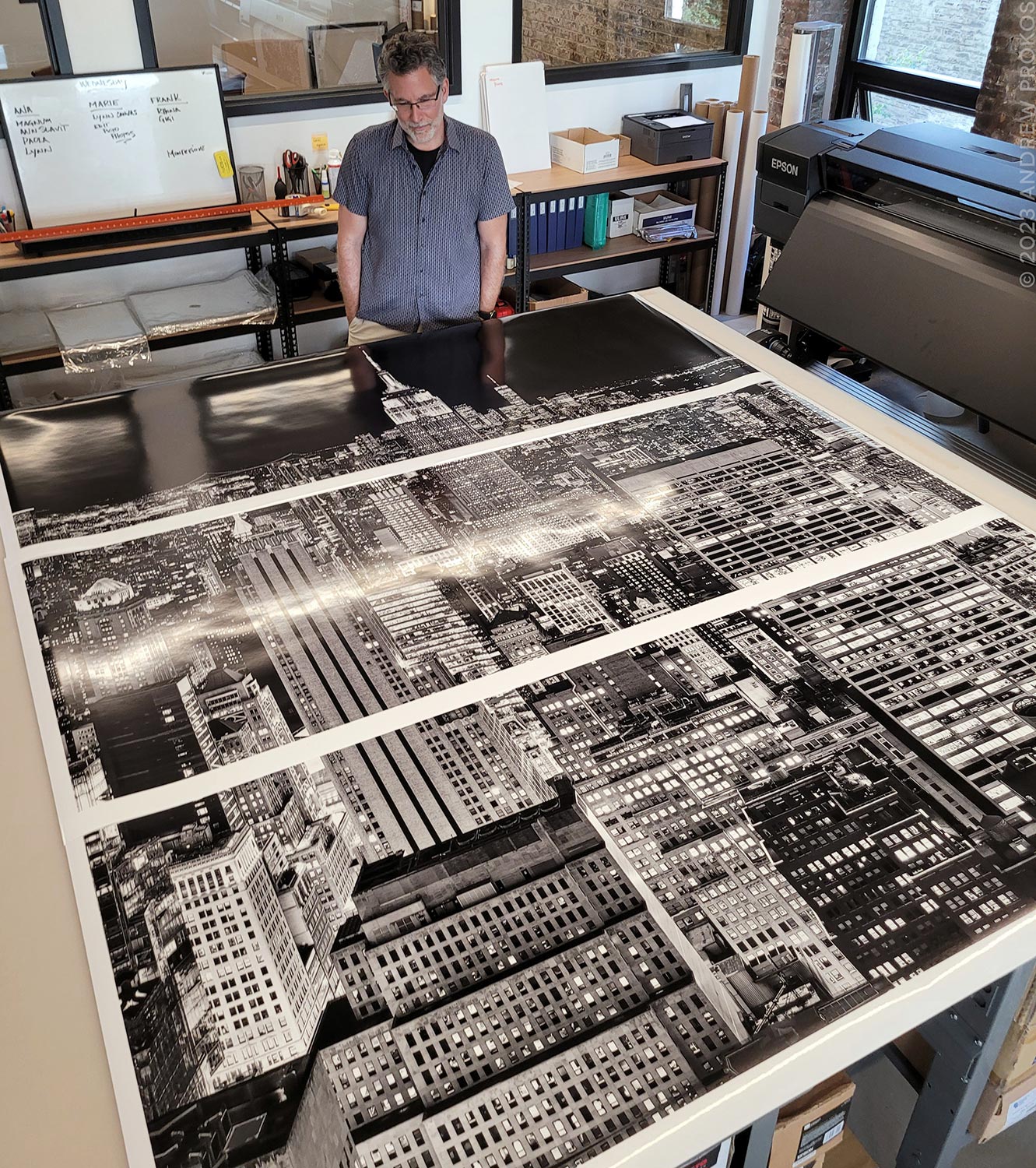
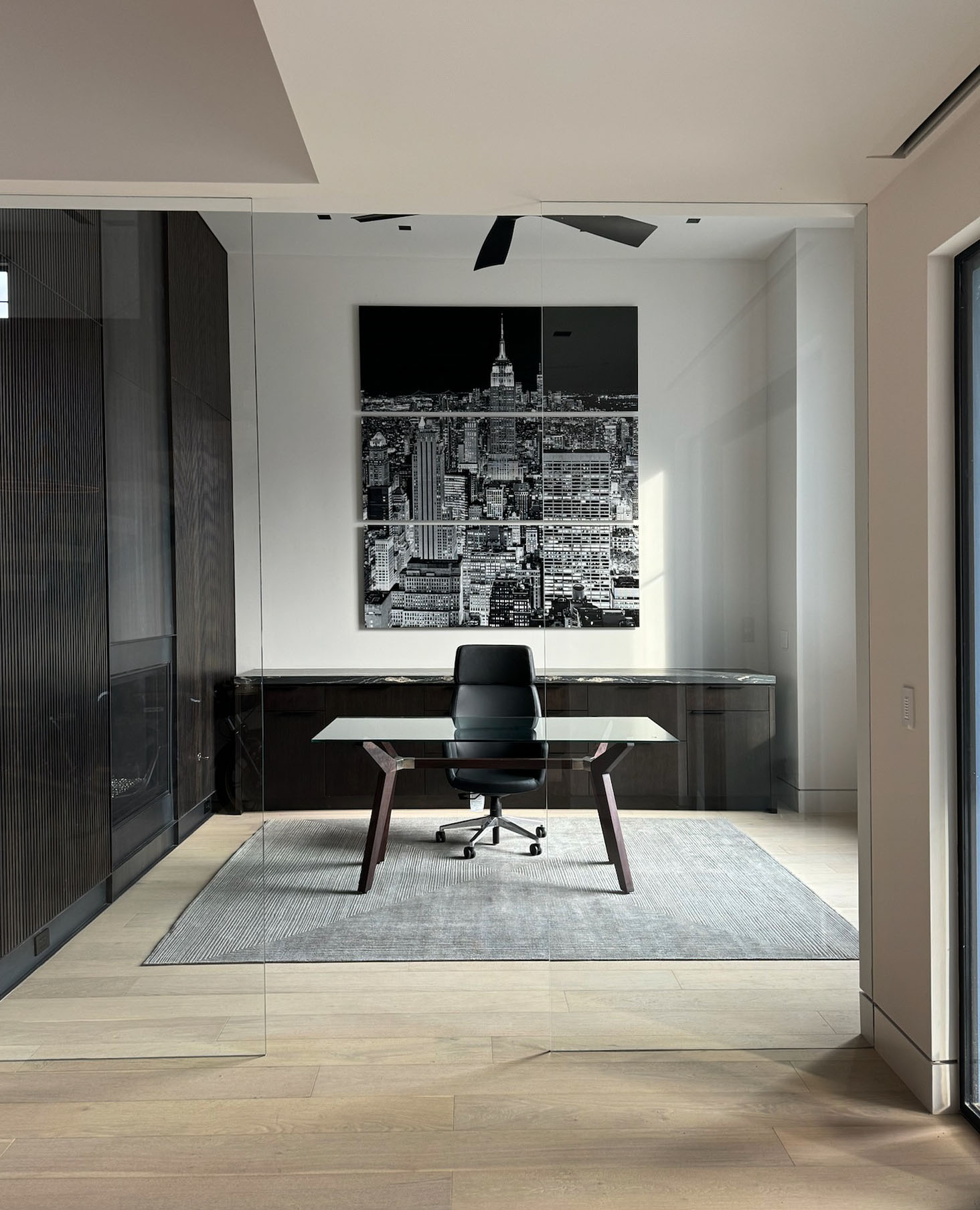
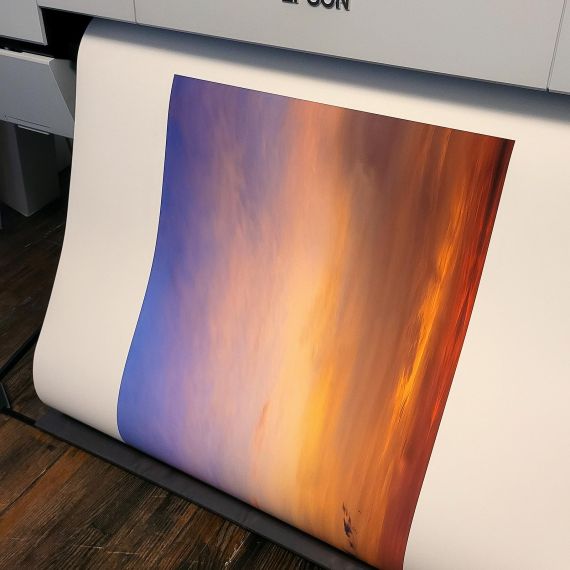
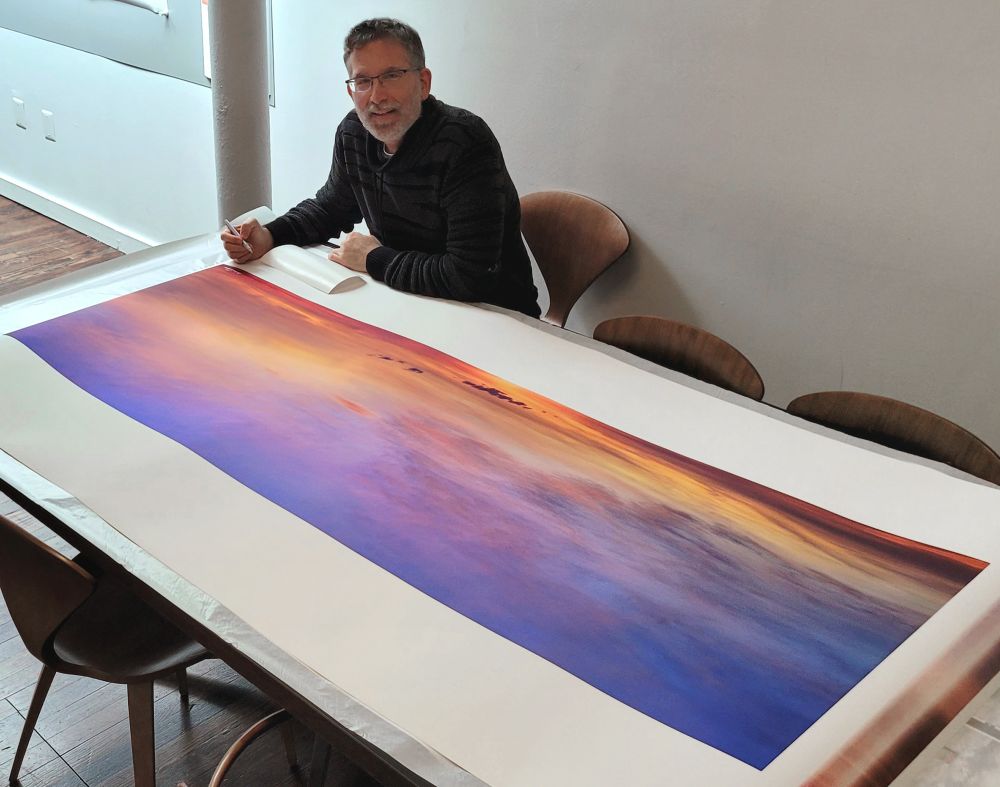
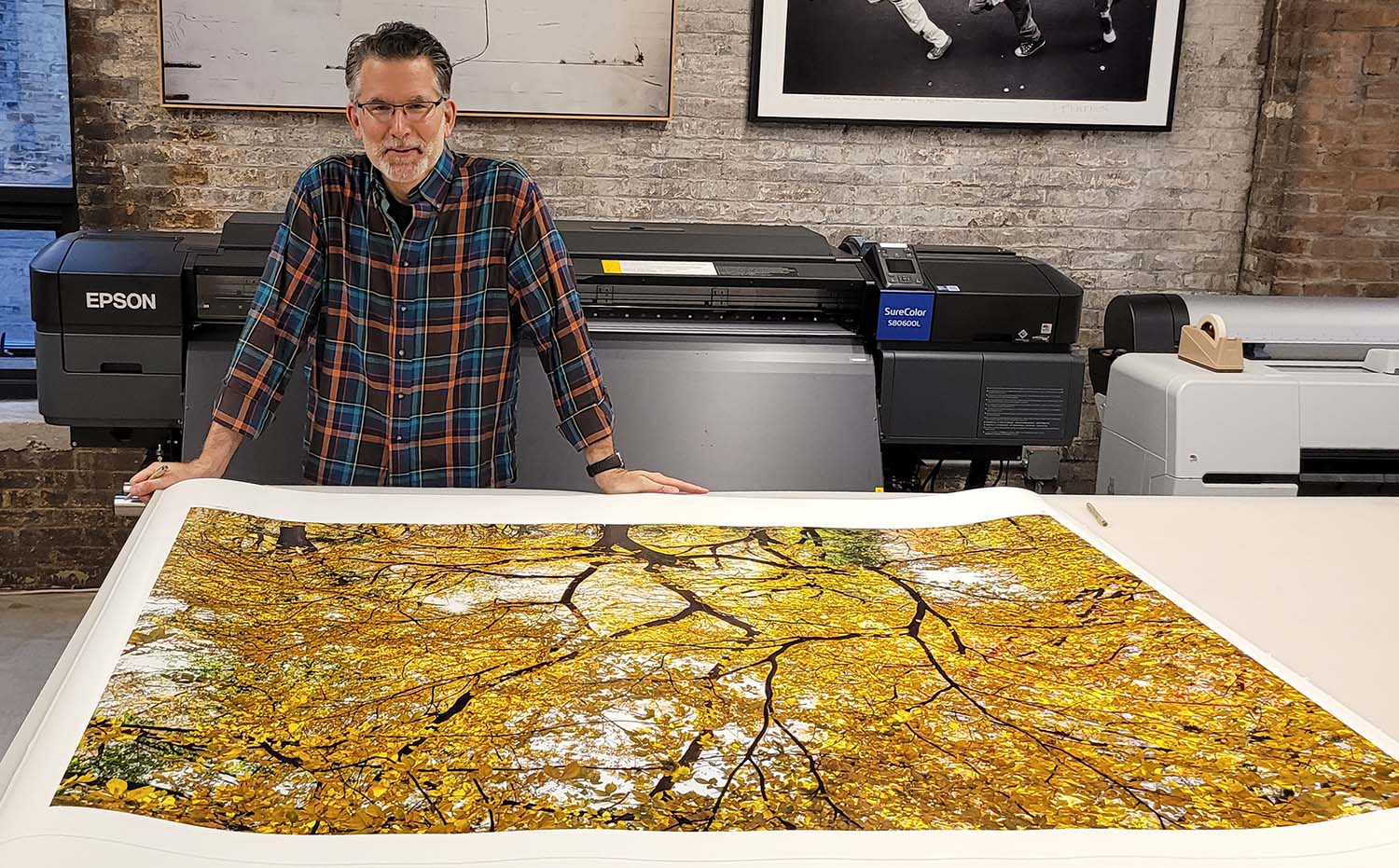
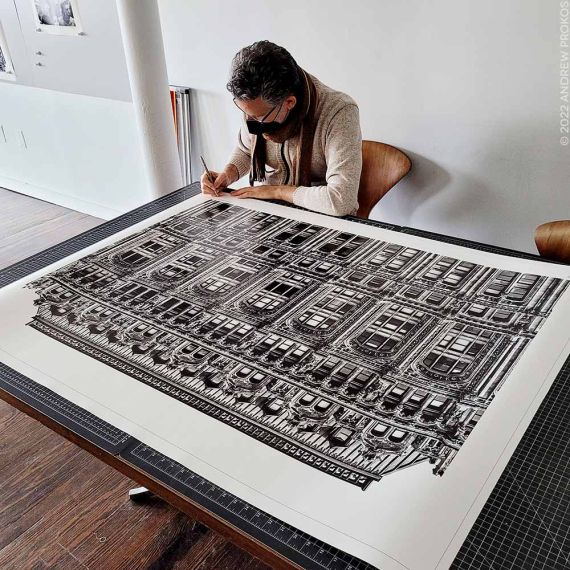
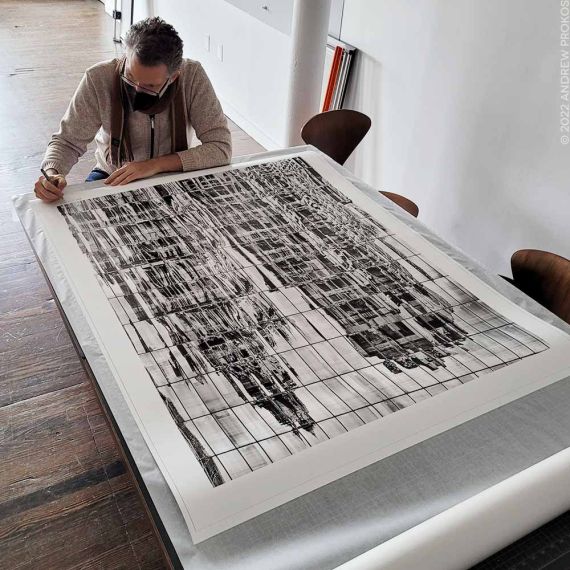
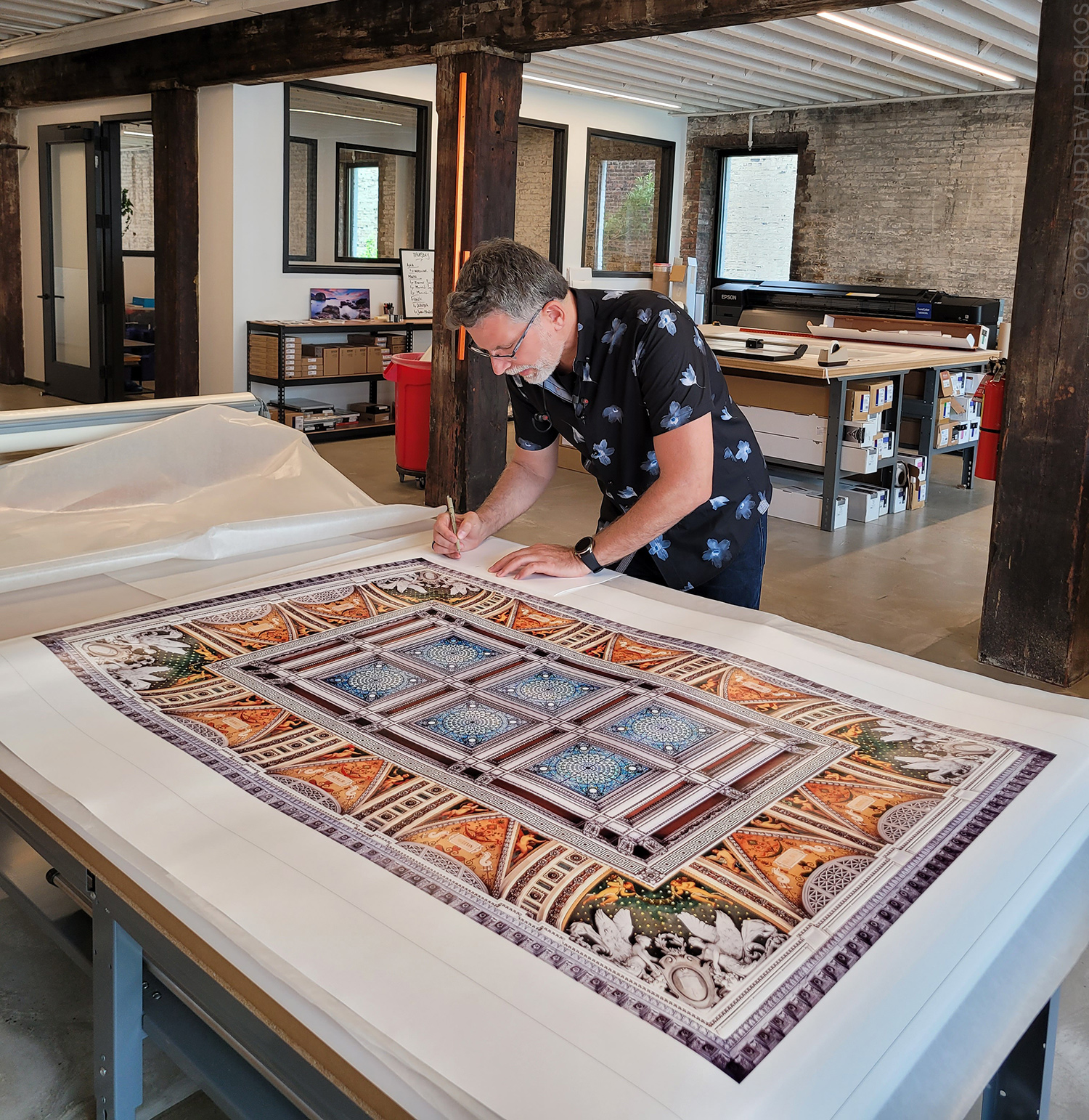
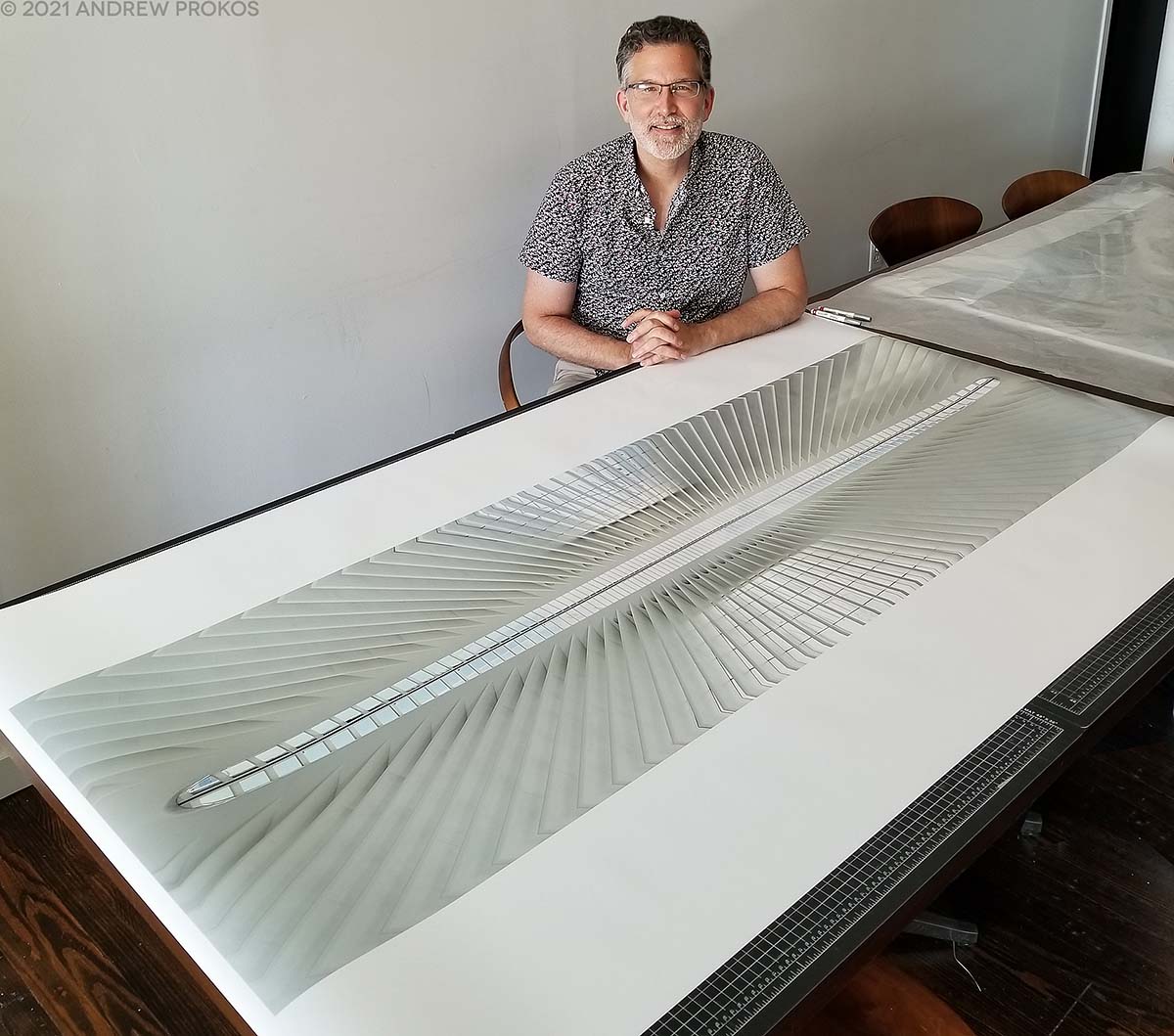
In my previous article I outlined the production process we use for creating large-format acrylic face-mounted photographs. In this article I discuss how I achieve the scale of my fine art prints, and why I print my work at these sizes. How large are we talking? My prints currently max out around 200 inches in width, but could go larger if a client wanted it. In reality there are not that many customers that need fine art above these sizes. As you can see from the examples below though a lot of collectors do want size, and the number of photographers that can deliver the quality they need is vanishingly few. Making large prints is not happenstance, it requires rigorous planning, being meticulous in your shooting and retouching, and working with the best materials and printers. Read on for more insight on how this is accomplished.
Scaling up the visual experience
Before I dive into how the large scale prints I sell to collectors around the world are created, I think it’s important to explain a bit of background and how I arrived at this point. I will also discuss why I am motivated to create large-scale artwork.
From the very beginning of my career as a photographer I wanted to be able to print my work large. To that end, I quickly moved from 35mm film, to medium format film cameras. And in the end even that was not enough…I settled on a 6x17cm panoramic film camera from Fuji. These cameras used large-format camera lenses and medium format roll film to give you big, beautiful chromes. They were 100% manual…there were no electronics whatsoever. A terrifying prospect, right? Well, back in the old day photographers actually had to know how to take meter readings and expose properly…it wasn’t all automatic. I carried a separate spot meter which I used to read the scene and estimate where I needed to be in terms of exposure. I always worked with chrome film, and positive films had very little latitude for improper exposure, especially in the highlights. One wrong move and you basically burned a roll of medium format film plus processing, so it was a very expensive game indeed!
These film exposures were drum scanned to produce very high-quality digital images which could then be retouched in PhotoShop and perfected for printing. This was my workflow from around 2004 – 2017 or so. I had 35mm digital cameras starting from around 2010 if I remember correctly…the quality was very good, but they simply couldn’t produce the scale I needed. The next step in the transition came along when stitching applications became more prevalent, and it became possible to stitch together numerous 35mm digital exposures into one larger image…game changing!
The advent of digitally stitched images allowed me to fully transition from shooting film to digital only capture. My series Night & Day was on the cusp of this change…the earlier images were shot on film in the early 2000’s and multiple drum scans were made. The images were then layered one on top of the other. Below is an example of an image from Night & Day derived from film composites (top) vs. digital capture (bottom). Can you see a major differencehttps://andrewprokos.com between the two?
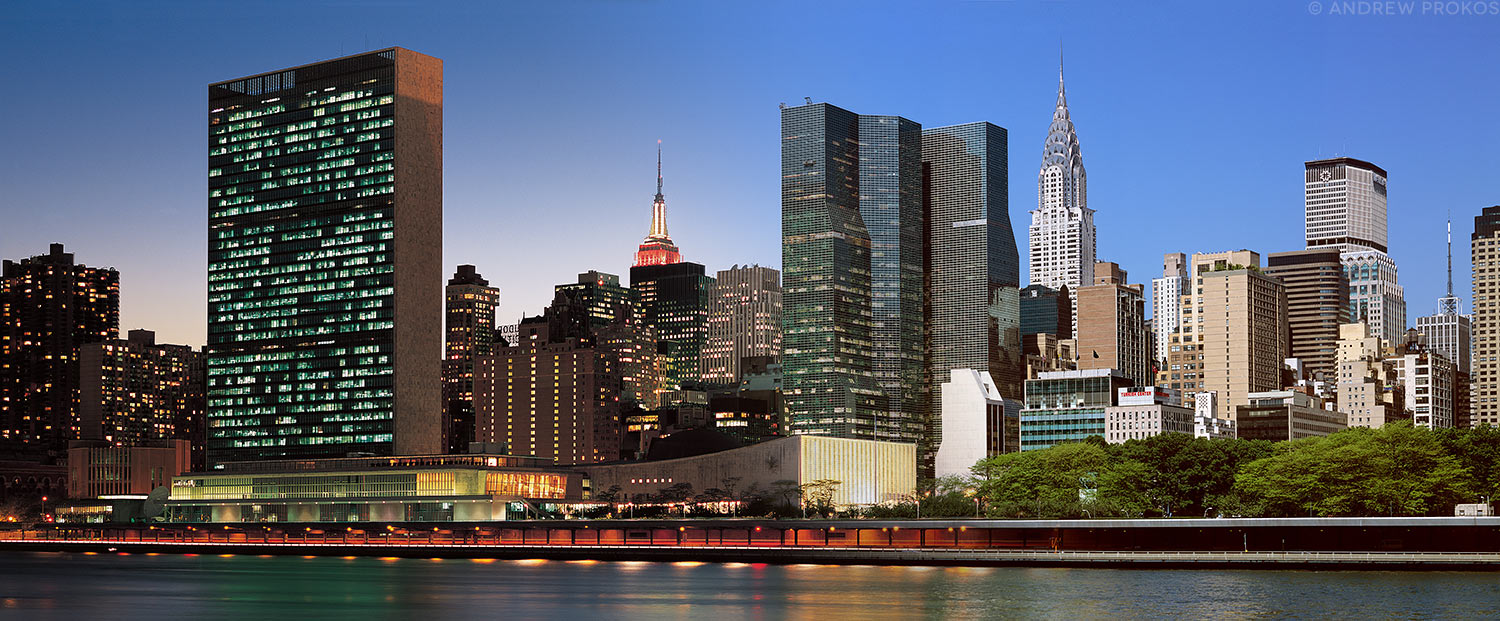
An image from Night & Day which was originally captured as multiple images on panoramic chrome film circa 2009
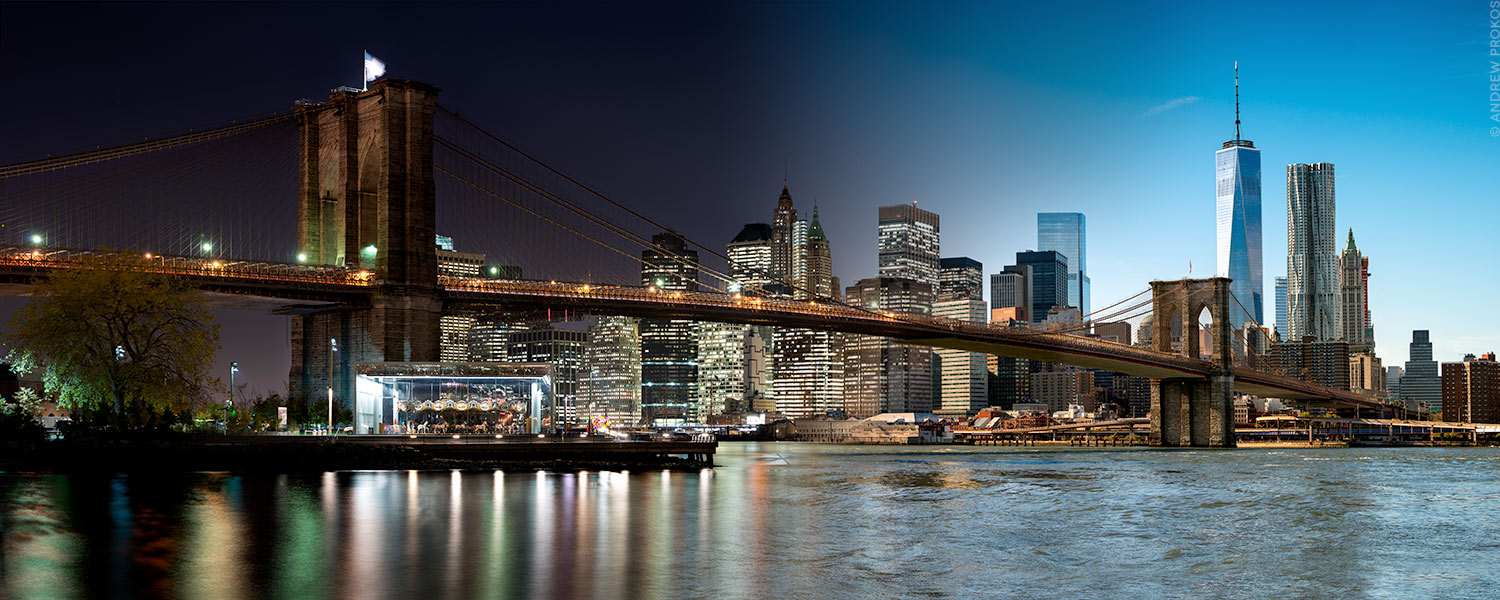
An image from Night & Day which was originally captured as multiple digital images and stitched together
Medium format photography to the rescue (again)
So now we have looked at the transition from shooting one large panoramic film exposure to shooting multiple 35mm images stitched together to create a very high-definition image. But something was also lost during that transition, and that something was simply the joy and spontaneity of shooting it in the first place. I loved the quality of the digital images because they were the first generation of the image, not a scan of the original image captured on a piece of film. They were crisp, detailed and extremely sharp…but the arduous process of capturing that many images in order to end up with one large image was tiring me out. This was doubly so at night, when the exposures were long. Where before I could shoot one large image and captured the entire scene in a minute or so, I now had to shoot 10-12 one minute long exposures to create the same image! Wait, I thought digital was supposed to make my life easier and free up my creativity here? In reality, the transition to digital made my workflow much more cumbersome and time consuming at first.
Things went along in this fashion until 2019, when I finally adopted medium format digital capture. I had come full circle…I started with medium format film many years before and had returned to my preferred format. The 102mp medium format capture freed me up to shoot fewer images and move more quickly…shooting became a joy again. I could now create large-format fine art prints at 96″, 120″ or even 200 inches in width with many fewer captures, and the quality of the captured images was impeccable.
Mastering the image, and the print
So now that we have seen to long arc of technological change on the capture side of the equation, I want to examine the premise behind creating large-scale artwork. Is this just a gimmick to call attention to my career, or is there another motivation behind scaling up my work to such enormous sizes?
Certainly I have examined my own motivation as an artist in being drawn to creating and selling such large scale pieces, but really when you boil it down it’s all about mastery and control. Not that many photographers really ever get to the point of producing large-scale photographs with such precision and clarity…trust me, I know, I have seen a lot of blurry, mediocre photography on the wall at the printers I work with. Ultimately, I insist that my work looks a certain way, and anyone who has worked with me during the production process, or who has seen my work exhibited, or who has visited my gallery when it was open will tell you that my work is simply on another level in that regard. Is it imperative for every photographer and every genre to be that crisp and details? Absolutely not. But it is the hallmark of my work, and so anything that doesn’t reach my own exacting level will never leave my studio. No compromise, no middle ground, no excuses. To that end I have a lot of means at my disposal, and as I have discussed in my previous articles, quality is imperative. I use the best museum grade archival papers, the best large-format Epson printers, and the best printers in New York. I use the best framing materials and skilled framers…I would never attempt to do it myself. That is all very costly in New York…but after years of delivering beautiful large framed artwork I have acquired the kind of clients that are willing to pay for that. And for that I country myself truly fortunate.
The benefits of creating large art…and one drawback
What are the benefits of creating large-scale work? Well there are several…first, the sense of prowess at being able to do it. Artists are not all as passive as the world likes to make us out to be…I’m certainly not. When I set out to produce something it’s going to get noticed, period. It is because I need ‘witnessing’ as an artist…yes and no. I do it because I can, and because others cannot.
But that isn’t just about an overblown ego. I derive financial benefit from being able to set myself apart from other artists in mastering such large pieces, and I am able to deal with collectors with large budgets who have a vision for filling a space in that new villa they just built. The customers purchasing these pieces are well-heeled and demanding. They don’t want to have doubts about the artist or the art they are buying, and they don’t want to be disappointed. In general, I make much more money on selling singular large pieces than numerous smaller pieces. That’s not to say that I am not happy selling artwork of all sizes, small artwork is far less demanding and takes less time (and a lot less stress) to produce.
So, there is a definite financial benefit to creating large-scale artwork. But are there also drawbacks? Yes, one big one that I can think of…stress. Creating very large-scale pieces is a risk. If the images are not meticulously captured you can just forget it. Pack it up, don’t even try. You cannot turn a sow’s ear into a silk purse where fine art is concerned…although I have seen many galleries over the years put plenty of sow’s ears in a frame and try to sell them as silk purses. Creating large-scale artwork is time consuming, and it is nerve wracking until the piece is finally completed. It’s like walking a tight rope with every sale. Perhaps that is part of the attraction for some artists…the drama of it all.
More Examples of Large-Scale Fine Art Prints
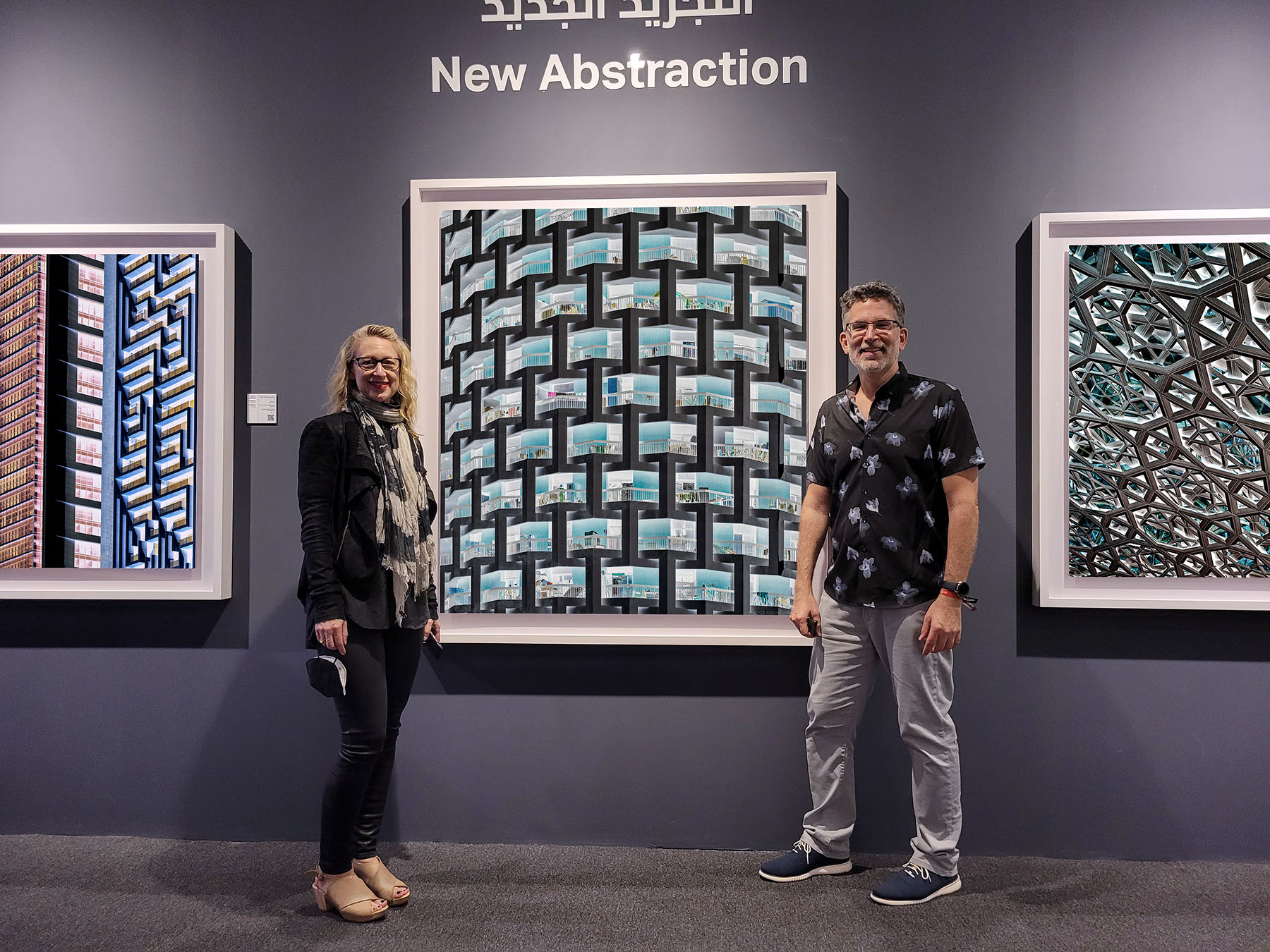
Videos of Large-Scale Fine Art Prints
Related articles
-

Architecture Photography – 100 Remarkable Examples from Around the World
100 remarkable examples of architecture photography from aro...
-

50 Stunning Examples of Cities at Night – Urban Night Photography
Fifty stunning examples of night photography captured in cit...
-
50 Awe-Inspiring Examples of Abstract Photography
50 awe-inspiring examples of abstract photography to fuel yo...
-
Your Photography Questions Answered – Part Two
Photographer Andrew Prokos answers questions about photograp...
-
Your Photography Questions Answered – Part One
Photographer Andrew Prokos answers questions about creativit...
-
Stories from My Time in Front of the Lens
Photographer Andrew Prokos reveals his never-told story of w...